
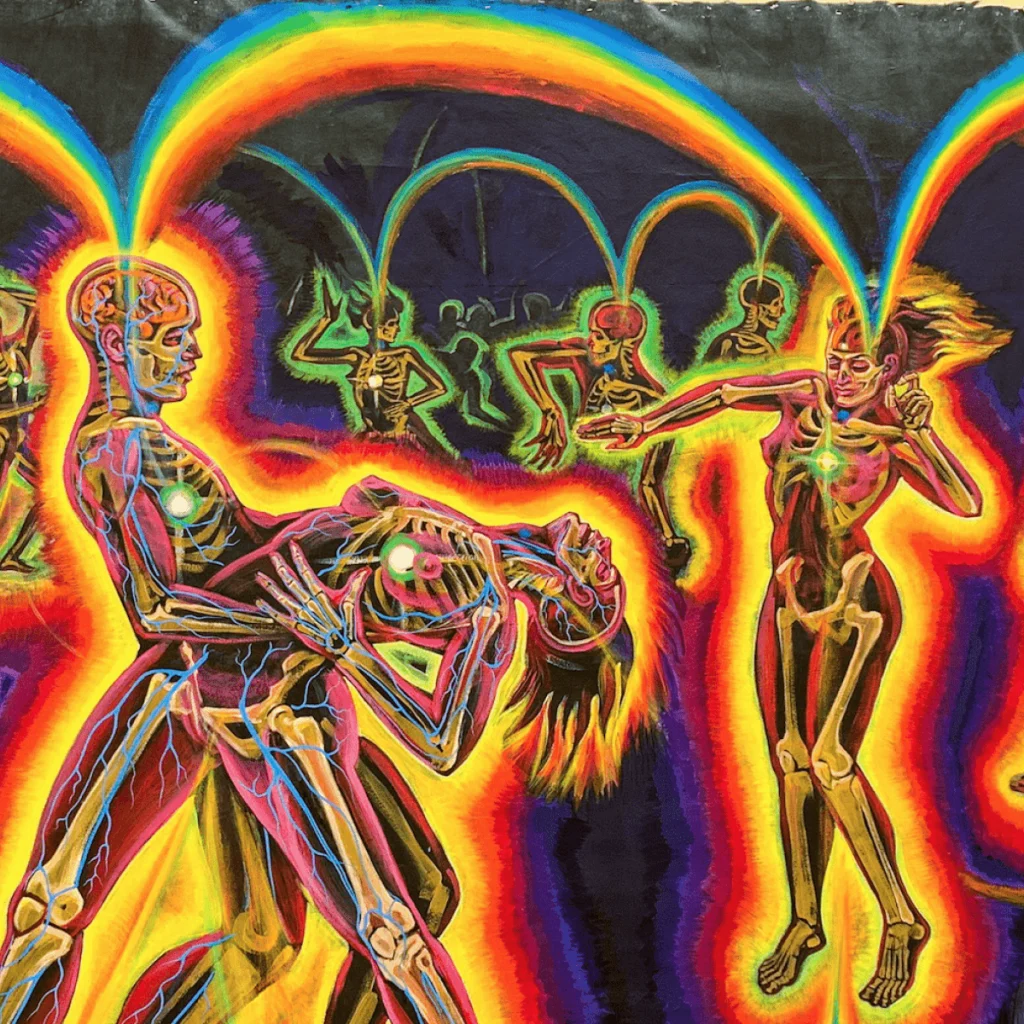
Dance is as old as the first human heartbeat. Before it was art, before it was entertainment, it was something far more fundamental — a technology of the body that every culture on earth independently discovered and used. Not for pleasure, though pleasure was part of it. For survival. For meaning. For the kind of transformation that the ordinary mind, left to itself, cannot reach.
Every tribe that ever gathered around a fire danced. They danced to mark the moments that mattered — birth, death, harvest, war, initiation. They danced to move grief out of the body and gratitude into it. They danced to call something in and to release something that had been held too long. The forms were different everywhere. The purpose was always the same: to use the body in motion as a vehicle for crossing a threshold that words and thought alone could not cross.
What made it work was not the steps. It was the repetition, the rhythm, the collective breath of bodies moving together over time. These were the conditions that opened the door to trance — that state where the ordinary self loosens its grip and something deeper moves in. And trance was never the end in itself. It was the passage. The place where healing could happen, where visions arrived, where the individual dissolved into something larger and came back changed.
This is what the earliest ritual dancers understood in their bones: that the body, given fully to rhythm and surrendered to the collective, becomes an instrument for transformation. Not the thinking mind. Not the will. The body. And the intention behind entering that circle — the willingness to offer something of yourself to the experience — was what separated ritual dance from ordinary movement. One was a crossing. The other was just motion.
That understanding never left us. It went underground, resurfaced in different forms, wore different clothes across different centuries and cultures. But the impulse is still here — in every dancefloor that has ever held a crowd moving as one, chasing something they might not have words for but recognise the moment it arrives.
There is a reason serious dancers and serious meditators have always recognised something in each other. The destination is the same — that wide, receptive state where the thinking mind steps back and something quieter takes over. The path just looks different. One sits still. The other moves until stillness finds them.
Dance as active meditation works through the body, not around it. The anchor is not the breath — it is the beat. Attention doesn’t turn inward toward silence, it opens outward into the body’s relationship with sound, with space, with the people moving alongside you. And when that relationship deepens — when the dancer stops thinking about the movement and starts becoming it — the internal narrator begins to fade. The part of you that watches, judges, and keeps score goes quiet. What’s left is presence. Pure, unmediated, alive.
This is not a metaphor. It is a physiological and psychological shift that anyone who has truly lost themselves on a dancefloor has felt — even if they never had the language for it. The music stops being something you hear and becomes something you are inside of. The crowd stops being other people and becomes part of the same organism. Time does something strange. Hours pass like minutes. The ordinary weight of being a self, with all its anxieties and narratives, lifts.
But this quality of experience does not happen automatically. It depends entirely on the conditions — and the most important condition is how the space is held. A dancefloor is not just a venue. At its best, it is a temple. And like any sacred space, what it produces depends on what is brought into it. Distraction fills it as easily as presence. Noise replaces transmission the moment intention disappears.
When a floor is held with awareness — by the DJ who understands they are guiding something, by the dancers who enter it willing to go somewhere — the whole nature of the experience changes. The music becomes a current rather than a backdrop. The dancing becomes practice rather than performance. And for those hours, the floor becomes what the ritual circle always was: a container for transformation, built not from walls and altars, but from sound, bodies, and collective surrender.
Dance ritual has rarely existed without some form of inebriation alongside it. This is not a modern habit or a sign of excess — it is one of the most consistent patterns across human culture and history. From the wine of the Dionysian mysteries to the peyote ceremonies of indigenous America, from the kava circles of the Pacific to the soma rituals of the Vedic tradition — wherever humans have gathered to dance their way into altered states, they have almost always brought something with them to help open the door.
The reason is simple and practical. The ordinary mind resists surrender. It monitors, it judges, it keeps one foot outside the experience at all times. Certain thresholds of openness — the kind that ritual dance is designed to reach — require that resistance to soften before they can be crossed. This is what inebriation, understood in its oldest sense, was always for. Not escape. Preparation.
In mainstream culture today, alcohol fills that role almost exclusively. And alcohol does lower the threshold — it loosens inhibition, softens the social armor, makes the body more willing to let go. But it also numbs. It dulls sensation rather than sharpening it, clouds perception rather than clarifying it, and tends to flatten the depth of the experience even as it removes the surface tension. The ecstasy it produces is mostly the relief of restraint being lifted, not the expansion of awareness that ritual dance was always reaching for.
Other traditions have worked with different tools — and those tools are finding their way back into dancefloor culture in ways that are hard to ignore. Psychedelics, empathogens, and plant medicines carry a fundamentally different relationship with consciousness. They heighten sensitivity to sound and body. They dissolve the ego’s running commentary and make genuine presence not just possible but difficult to avoid. In the right context, they don’t take you out of the experience — they take you deeper into it than you could otherwise go.
But this is exactly where intention becomes everything. Because any substance — in any context — is only as useful as the clarity of purpose surrounding it. Without that clarity, without treating the ritual as a ritual, the same tools that can open a doorway become a way of running from ordinary life rather than genuinely encountering something beyond it. The ecstatic moments become escape rather than arrival. The medicine enables. What it enables is entirely determined by what the dancer brings to the floor — the willingness to be changed, not just relieved.
This is the thread that runs through all three parts of this. Dance, meditation, medicine — none of them work in isolation. They are three aspects of the same ancient technology, and they only deliver what they have always promised when they are approached with the same thing the earliest ritual dancers brought to the circle: intention, and the genuine willingness to cross a threshold and come back different.